
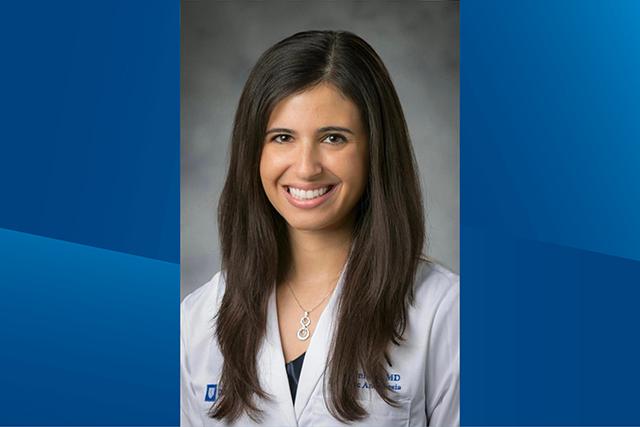
The Gerber Foundation has awarded Duke Anesthesiology’s Lisa Einhorn, MD, MHSc, a 3-year $349,989 grant for her project titled, “Optimizing Pain Management in Infants and Young Children Undergoing Cleft Palate Repair.”
Cleft palate repair is a complex surgical procedure essential for supporting growth, improving speech, and achieving long-term developmental milestones. It is also among the most painful surgeries performed in infants and young children. Effective pain control is critical, not only for comfort, but to prevent complications such as poor feeding, prolonged hospitalization, and delayed recovery. Despite this, evidence-based guidelines for pain control after cleft palate surgery remain limited, leaving clinicians without clear, surgery-specific recommendations.
To address this gap, Einhorn will lead a randomized controlled trial of 60 infants and young children to compare the efficacy of a long-acting analgesic to routinely used short-acting opioids. The study will test whether a single intraoperative dose of methadone—a long-acting opioid already used successfully in other pediatric surgeries—can provide better pain relief, reduce total opioid exposure, and improve recovery without increasing adverse effects.
Her trial is designed to establish the optimal weight-based dose of methadone for cleft palate surgery and generate actionable evidence that can be applied directly to clinical practice. The study incorporates rigorous blinding, standardized pain assessments, and a comprehensive statistical analysis plan to ensure robust and reliable results.
“The need for this research is urgent,” says Einhorn, associate professor of anesthesiology. “While methadone is already used successfully in other pediatric surgeries, its role in cleft palate repair, a surgery with uniquely high pain burden in a preverbal population, has never been studied. Findings from this study will generate foundational evidence to fill a critical knowledge gap, inform best practices, and support safer, more effective perioperative analgesic care for thousands of infants and young children each year.”
Upon completion, study results will be implemented through the Allied Cleft & Craniofacial Quality-Improvement and Research Network (ACCQUIREnet), a national consortium of pediatric centers dedicated to improving outcomes for children with craniofacial conditions. This dissemination framework will ensure the rapid translation of research into practice with the potential to transform perioperative care and quality of life for a vulnerable pediatric population.