

Alumni Notes

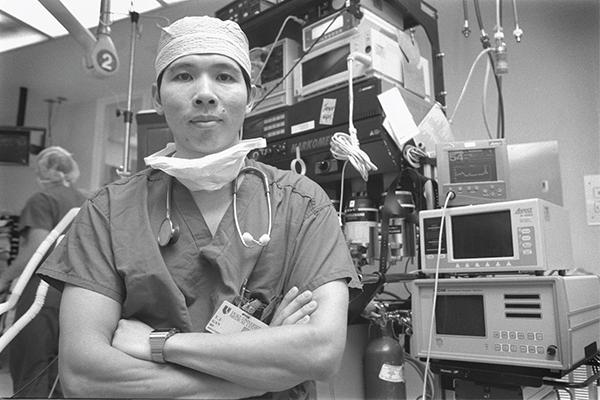
Tong Joo (TJ) Gan, MD, MBA, MHS
Professor and Mildred M. Oppenheimer Distinguished Endowed Chair and Head
Division of Anesthesiology, Critical Care and Pain Medicine
The University of Texas MD Anderson Cancer Center
Faculty, Duke Anesthesiology & Duke Clinical Research Institute
Senior Research Fellow, Duke Center for Integrative Medicine
Master of Health Sciences, Duke University
Why anesthesiology?
In medical school, I was particularly interested in physiology and pharmacology. My mentor advised me to spend some time with anesthesiologists in the operating room; the few days I spent observing ultimately led to my decision to choose anesthesiology as a specialty. The people I met were very friendly and welcoming. I liked its fast-paced nature, seeing the effect of a drug working almost at the end of an IV injection, and being able to reverse the effects of the drugs equally rapidly. I was fascinated by the pharmacology of the drugs used in anesthesia and the intricate physiology at play during the intraoperative period. It also takes special skill to establish a rapport with the patients in a very short space of time, gaining their trust at the most vulnerable time of their lives. Often, one can see a rapid change in the patient’s facial expression from anxiety to some degree of relief and calmness when given reassurance by the anesthesiologist.
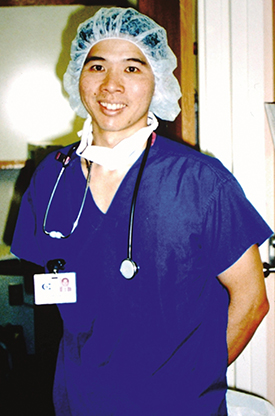
How did your 21 years at Duke Anesthesiology influence your approach to clinical practice and research in the field?
I like to say that I grew up professionally at Duke, having spent a significant portion of my career there. I credit my academic career to my mentors at Duke. When I first arrived as a visiting associate from the United Kingdom, I had made up my mind to pursue an academic career. I went to see the then vice chair for clinical research, Dr. Peter Glass, who was conducting a series of opioid-sedative drug interaction studies. That was my first clinical research experience at Duke. At that time, anesthetic drug development was in its golden era, when many of the drugs we use today were investigated for FDA approval. Over the next 10 years, I was closely involved in many of the clinical trials on drugs targeted for the perioperative environment. Along with intravenous fluid research, I became interested in hemodynamic monitoring. I was fascinated with the new cardiac output monitors, and I started performing clinical trials on various hemodynamic devices. The concept of goal directed fluid therapy (GDFT) was actively investigated at that time, and we tested the clinical utility of the various hemodynamic devices when used for GDFT.
How has the mentorship you received at Duke Anesthesiology impacted your career trajectory?
I can’t emphasize enough the importance of mentorship in one’s academic career. I was fortunate to have great mentors during my time at Duke. This has helped me enormously in a variety of ways, from learning practical skills such as research methodology, manuscript preparation and grant submission, to network development, career advancement and advocacy during promotion to confidence building through constructive feedback.
What are the essential qualities and traits of a good mentor?
There are many, but some of the important ones are having deep subject matter expertise and experience, good communication skills, approachability, respect for mentee’s autonomy and perspectives, genuine empathy and emotional intelligence, as well as identifying opportunities and sponsorship in professional settings.
What key lessons did you learn at Duke that equipped you to become a leader in the field?
You need the help and support of colleagues and a conducive environment. Duke Anesthesiology provided these ingredients to be a successful leader. There are many role models to emulate. The spirit of lifelong learning encouraged me to seek additional skillsets to equip myself to lead. For example, pursuing a master’s degree helped me with my clinical research and manage multicenter trials at the Duke Clinical Research Institute, and attending leadership courses at the Fuqua School of Business encouraged me to pursue an MBA degree. The value of collaborating with other investigators with specific expertise enabled me to learn from others.
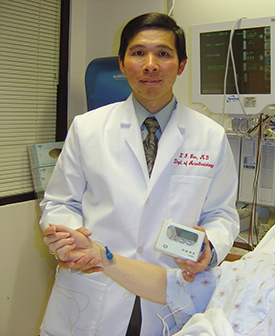
What are some significant leadership lessons, particularly during your time as chair of one of the largest clinical departments at Stony Brook?
Successful chairs need to strive for excellence in four main areas of the academic mission: clinical care, education (including residency and fellowship programs), research, and administrative responsibilities. Building an effective leadership team with complementary talents is critical, as no individual can excel in all aspects of department leadership. Regular, honest updates about departmental challenges and successes build trust and alignment. Create a psychological safe environment where staff feel comfortable speaking up about problems. This is not as easy as it seems, and it must be genuine. For example, allocate time during a faculty meeting for open Q&A sessions or create an anonymous digital suggestion/problem box, where anyone in the department can use it to address their “pebble in the shoe” issues.
Health care is constantly evolving and hence change is inevitable. Managing change in the midst of day-to-day activities requires focus and frequent follow-up in order to achieve the goals. One of the most emotionally demanding aspects of being a chair is making difficult decisions on personnel issues. It is critical to address poor performance or personnel creating a toxic environment quickly to maintain standard and morale.
Identifying and mentoring promising faculty ensure departmental sustainability and creates a pipeline of talent. Equally important is to advocate for faculty and staff. Their successes reflect on your leadership and guidance.
What motivated you to pursue an MBA and how has it complemented your medical career?
Many physicians pursue MBAs to develop leadership and management capabilities that aren’t taught in medical training. Medical education traditionally focuses on clinical skills rather than organizational leadership, financial management, or operational efficiency. An MBA helps bridge this knowledge gap, especially for those interested in administrative or executive roles.
My MBA experience provides a valuable perspective on health care as an industry rather than just clinical practice. This broader view can help identify opportunities for innovation in care delivery, technology integration, or practice management that might not be apparent from a purely clinical standpoint.
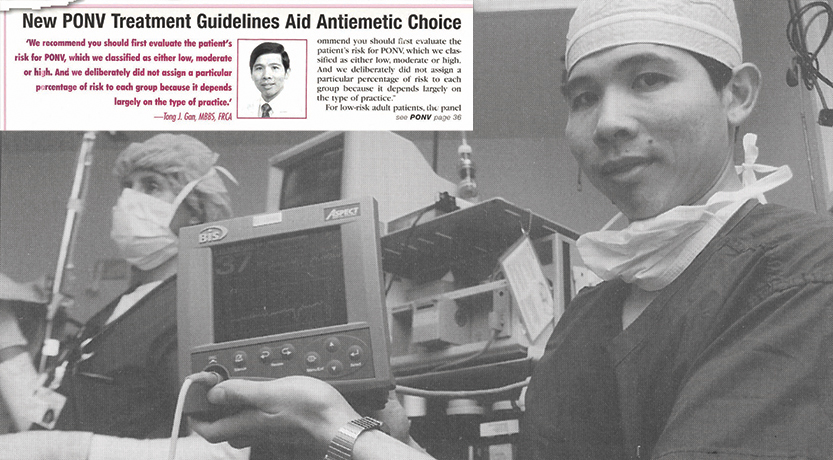
What key skills and qualities do you believe are essential for success in anesthesiology practice and research, based on your experience?
In addition to clinical excellence, which we are trained to do, it is important to remain curious and ask the right questions, e.g. is there a better way to do this? Research requires methodological rigor and attention to detail. It helps critical thinking skills. Having gone through formal clinical research training helps supplement those needed skills.
Research is a 24/7 activity. Patients may develop adverse events; protocol queries may require immediate attention; analysis of data and manuscript preparation often take place outside normal clinical hours. It’s hard work but it’s rewarding, adding variety to routine clinical practice and potentially contributing towards science and improving how we do things.
Research Milestones
- Played an influential role in proving the efficacy of antiemetics and establishing postoperative nausea and vomiting (PONV) consensus guidelines that are now an international standard of care.
- Found acupuncture can prevent PONV and postoperative pain and is highly effective in reducing the severity and frequency of chronic headaches.
- Conducted pioneering work in the concept of perioperative goal-directed therapy and the use of bispectral index to monitor the depth of anesthesia – a technology now used around the world.
- Internationally renowned for his clinical research in perioperative outcomes and anesthetic pharmacology.
- Primary author of the four international consensus guidelines on the management of postoperative nausea and vomiting, including the one published in 2020
Key Leadership Roles
- Chair, Department of Anesthesiology, Stony Brook University
- Vice-Chair, Clinical Research and Faculty Development, Duke Anesthesiology
- Vice Chair, Stony Brook Medicine Physician Group
- Founding President, American Society for Enhanced Recovery (ASER)
- Past President, Perioperative Quality Initiative (POQI)
- President Elect, Association of Academic Anesthesiology Chairs (AAAC)
- Past President, Society for Ambulatory Anesthesia (SAMBA) & International Society for Anesthetic Pharmacology (ISAP)
- Perioperative Medicine Section Editor, Anesthesia and Analgesia
As a PI/co-PI for 100+ clinical trials, what advice do you have for early career physician-scientists looking to make significant contributions to the field of anesthesiology research?
Be curious and ask questions. There is always a better way of doing what we are currently doing. Do not be satisfied with the status quo. Start small and stay focused but start today, as it is easy to be distracted by the many demands of the day. I advise junior investigators to tackle manuscript writing in small manageable sections, e.g. use the abstract that was submitted for a poster presentation as a skeleton to build the manuscript. Start with the introduction, then the method and the result section. Once you have a draft on those sections, you are on a home stretch writing the discussion.
As a prolific clinical researcher, what initially inspired your involvement in clinical research?
My first clinical trial was on the comparison of ondansetron and droperidol for the prevention of postoperative nausea and vomiting. Ondansetron had just been launched in the market and other than the phase 3 clinical trials for the approval of the drug by the FDA, which involved comparison with placebo (saline), there was no comparative trial with other routinely used antiemetics. Droperidol was widely used at that time, so it was natural to design a study to compare the efficacy between these two antiemetics. From this study, I went on to conduct other studies on antiemetics and on the management of postoperative nausea and vomiting (PONV), which became a lifelong research passion.
As an award-winning educator, what challenges have you faced in training others and what lessons did you learn from those teaching experiences?
Learning is a two-way process. I learn as much from the residents as they learn from me. One of the most enjoyable sessions when I was chair at Stony Brook was to meet with the residents weekly during lunch to address any issues they may face, offer career advice and discuss topics on leadership, to prepare them for their future roles. This is one aspect that is lacking in the residency formal curriculum. Similarly, as the anesthesiology specialty is increasingly embracing perioperative medicine, there is inadequate training on this topic during residency. Recently, as part of the Center for Perioperative Medicine, we created a formal curriculum for a Perioperative Medicine Fellowship and plan to submit the education content to the American Board of Anesthesiology and MOCA Committee for consideration.
How do you manage balancing the roles as researcher, educator and clinical leader?
Strategic time management is the key. Each of these roles need dedicated protected time blocks. It is important to be realistic and acknowledge the true time requirements of each responsibility as well as periodic review of time allocation that align with the current priorities and institutional expectations. It is also critical to set boundaries and learn to decline opportunities that do not align with core priorities. Most importantly, recognizing that effectiveness across all domains requires personal wellbeing and appropriately incorporating downtime to take care of that aspect.
Most successful academic clinicians often find ways to create virtuous cycles where each role enhances rather than competes with the others. For example, clinical observations spark research questions, research findings inform educational content, and leadership roles provide platforms to implement evidence-based improvements.
Among the institutions that you’ve trained and practiced, what sets Duke Anesthesiology apart?
It’s the people and unique environment.
How do you see the role of anesthesiologists evolving in the future, and what opportunities do you envision for innovation in the field?
Growth in perioperative medicine, where anesthesiologists manage the entire surgical journey from preoperative optimization through post-discharge recovery. I foresee a continued expansion beyond the OR and increased involvement in procedural sedation across the hospital and the office, along with greater leadership in coordination of acute care, development of enhanced recovery protocols, quality improvement and outcomes. Anesthesiologists have a significant opportunity to demonstrate their impact on outcomes beyond the immediate perioperative period, potentially reshaping their role and influence within health care systems, in its transition to value-based care.
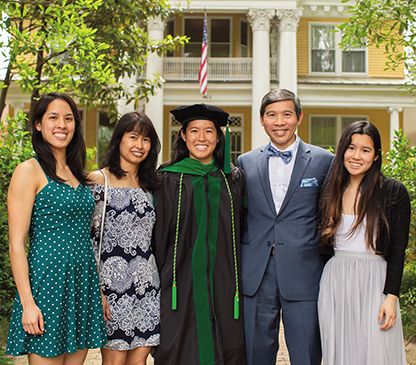
As a father of three, what is your philosophy on work-life balance?
I am blessed with a very supportive family. I have three daughters, who are now adults and each engaged in their respective career. I was very busy with clinical and research work when they were growing up, but I was able to find time to spend with them after most workdays as well as weekends, when we spent much of our leisure time at the Duke Faculty Club, swimming and playing tennis. My wife would make and pack dinner, which we would enjoy as a family at the club. These activities helped them develop a passion for swimming and tennis, which led to my oldest daughters becoming recruited college swimmers and the youngest, a recruited tennis player.
What advice do you have for aspiring anesthesiologists?
Academic anesthesiology is a great career choice and I would not trade it for anything else. Duke is such a great environment and if you set your goals early on in your career, with hard work and resilience, coupled with good mentorship, you are likely to achieve your objectives. It is exciting to be in the forefront of engaging in scientific discovery and improving clinical care as well as sharing your work with peers through meeting presentations, manuscripts and generating clinical practice guidelines.
Last year, the key words in “Alumni Notes” were opportunity and transformation. What are the key words of your journey?
Lifelong learning and developing emotional intelligence. BP