Creating a culture of mentoring in which every faculty member is invested and engaged in professional growth.
The ABLE Program is designed to accelerate career development for junior faculty in their chosen pathway by pairing them in a one-year program with a personal mentor. The program involves training in aspects of career development that include strategies to build resilience, enhance professional skills, and learn the infrastructure that supports their chosen domain. The training will be accomplished through small group discussions, lectures, and participation in online programs available within the institution. In addition, regular meetings with the personal mentor, a senior faculty member, will enhance the value of the program. The ABLE Program supplements existing mentor relationships.
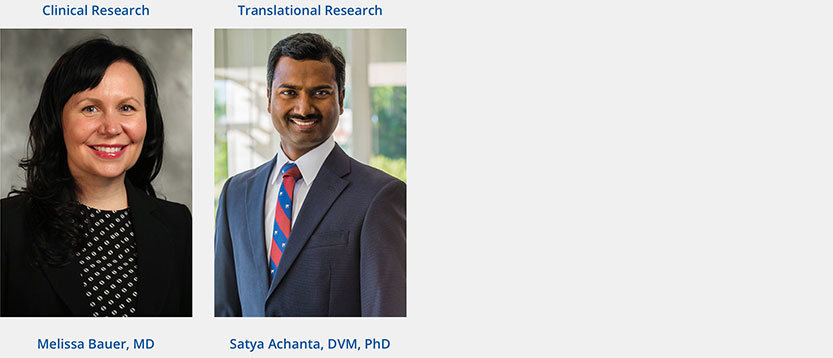
Every year, faculty are selected for each of the following domains:



Goals
Accelerate your growth. Enhance your personal and professional growth with support from a faculty mentor. Specifically:
- Self-leadership: Align your work with what matters most to you (purpose & values). Develop or enhance good habits for time and attention management, physical and emotional well-being, intellectual growth and curiosity, cultivating meaningful relationships, and practices for personal and professional accountability
- Core professional skills: presentations and speaking in public, negotiations, conflict management, change management
- Career advancement: familiarize yourself with career advancement pathways and prepare a dossier
- Core basic science skills you can use immediately. Build practical literacy in modern biomedical research through focused workshops, hands-on labs, and investigator office hours. Develop skills in experimental design, hypothesis generation, rigor and reproducibility, animal and cellular models, molecular and omics techniques, data interpretation, and grant-ready science—taught using anesthesiology-relevant research questions.
- Capstone that matters. Individual or team project centered on a real, fundable basic science question; produce a tangible scholarly product (e.g., specific aims page, pilot data package, or draft manuscript) and present findings at an end-of-year research showcase.
- Plug into the Duke ecosystem and beyond. Direct connections to Duke basic science cores, shared instrumentation facilities, research administration, and grant development offices; access to methodological mentors, pilot funding pathways, and collaborative lab networks. Identify two collaborators outside Duke and one relevant scientific society to join and actively engage.
- Core operational and leadership skills you can use immediately. Build practical fluency in healthcare operations through applied workshops, simulations, and leadership coaching. Learn process improvement, Lean/Six Sigma principles, capacity management, staffing models, quality and safety metrics, financial literacy, and change management—using real anesthesiology and perioperative service-line challenges.
- Capstone that matters. Individual or team operational improvement project focused on a real Duke clinical or administrative problem; deliver a measurable outcome (e.g., workflow redesign, cost-savings analysis, quality improvement initiative, or policy proposal) and present results at an end-of-year showcase.
- Plug into the Duke ecosystem and beyond. Direct engagement with perioperative leadership, hospital operations, quality and safety offices, finance, and analytics teams; access to executive mentors and leadership development pathways. Identify two operational leaders outside Duke and one professional or leadership society to join and become active in.
- Core Data Science skills you can use immediately. Build practical literacy in data science and AI through short workshops, guided labs, and expert office hours. Learn basics of coding for clinical data, study design & statistics, ML fundamentals and model evaluation, ethics/bias, version control, and reproducible workflows—taught with real health-system examples.
- Capstone that matters. Individual or team project on a real Duke problem; produce a tangible deliverable (e.g., dashboard, predictive model, or manuscript) and present at an end-of-year showcase.
- Plug into the Duke ecosystem and beyond. Direct connections to Duke AI Health, Biostatistics & Study Design, Research Computing, Libraries/Data Services, and data governance; access to compute resources, a mentor network, and pathways to funded collaborations. Identify two collaborators outside of Duke and one professional society to join and get involved with.
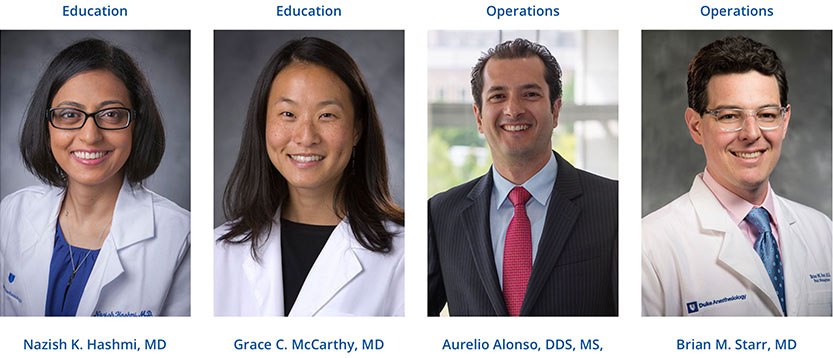
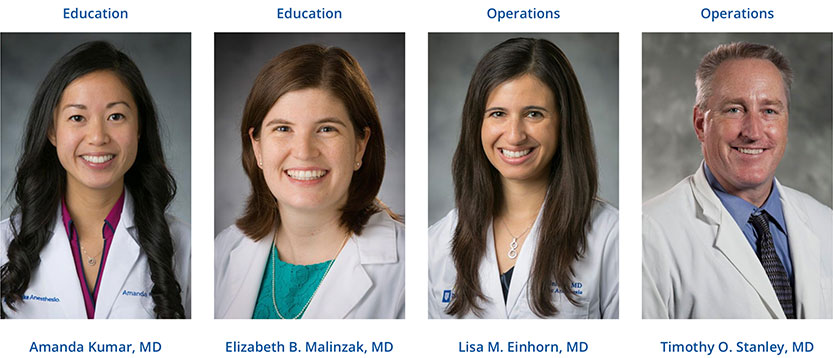
- Core educational skills you can use immediately. Develop practical mastery of modern health professions education through interactive workshops, peer teaching labs, and expert mentorship. Learn curriculum design, assessment and feedback, simulation-based education, program evaluation, educational scholarship, and coaching—tailored to anesthesiology learners across the continuum.
- Capstone that matters. Individual or team educational project addressing a real teaching or training gap; produce a tangible product (e.g., curriculum, assessment tool, simulation scenario, or publishable education study) and present at an end-of-year showcase.
- Plug into the Duke ecosystem and beyond. Connect with Duke AHEAD, GME and UME leadership, simulation centers, libraries, and education research experts; access to mentors, evaluation support, and dissemination pathways. Identify two collaborators outside Duke and one national education society to join and actively contribute to.
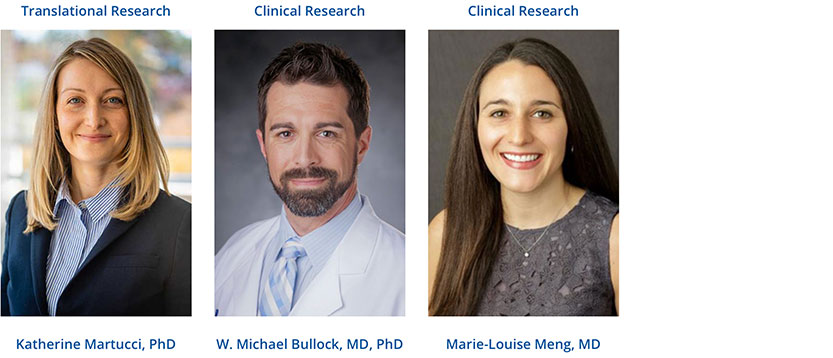
- Core translational research skills you can use immediately. Develop practical expertise in moving discoveries from bench to bedside through interactive workshops, case-based discussions, and expert mentorship. Learn clinical trial design, regulatory pathways, human subjects research, and implementation science - grounded in perioperative and critical care applications.
- Capstone that matters. Individual or team translational project addressing an unmet clinical need; produce a concrete deliverable (e.g., IND-ready concept, clinical protocol, implementation plan, or pilot grant proposal) and present at the end-of-year showcase.
- Plug into the Duke ecosystem and beyond. Engage with Duke CTSI, IRB and regulatory teams, clinical research units, industry liaison offices, and implementation science experts; gain access to trial infrastructure, funding mechanisms, and translational mentors. Identify two collaborators outside Duke and one national translational or clinical research society to join and participate in.

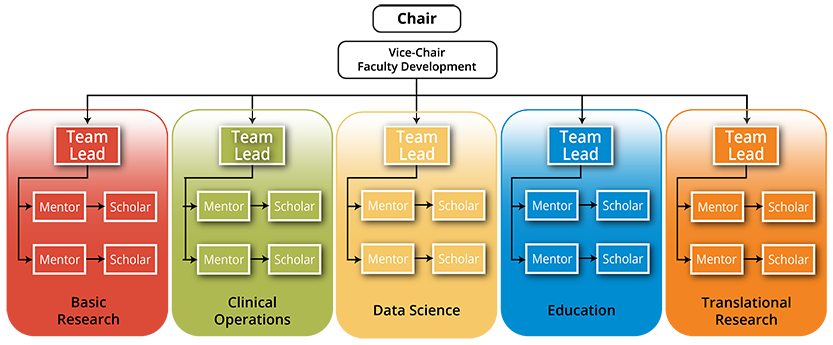
Structure
Clinical Operations

Translational Research

Basic Research

Clinical Operations
Data Science
Education
Translational Research
Selection and Eligibility
All junior faculty at the rank of assistant professor or instructor are encouraged to apply for ABLE Scholarship. All applicants to the program will be screened by both domain Mentors and discussed with team leads. Recommendations will be made by team leads to the senior cabinet for final selection. Unsuccessful candidates will be encouraged to reapply. Those in a grant application cycle, or within 2 years of promotion eligibility will be prioritized. Faculty at the associate professor rank may also apply for the ABLE program; selection will be approved by Team Leads in consultation with the VC for faculty development and department chair.
Mentors will meet with their assigned ABLE Scholars as often as required, but at least every month to set goals and review progress. Team Leads will meet with Mentors every quarter to review progress and discuss opportunities and barriers within the broad goals of the ABLE program. Team Leads will meet with the VC for faculty development every six months to review progress. The VC will provide the department chair an annual report for each domain.
Applications are now closed. Thank you for your participation.
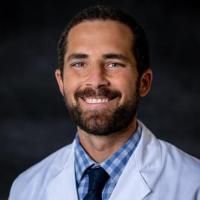
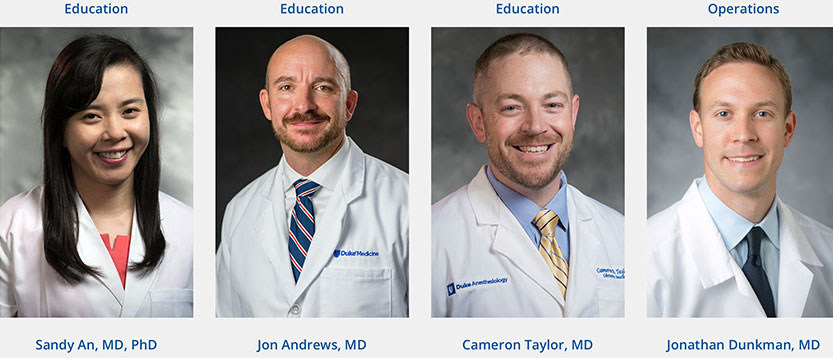
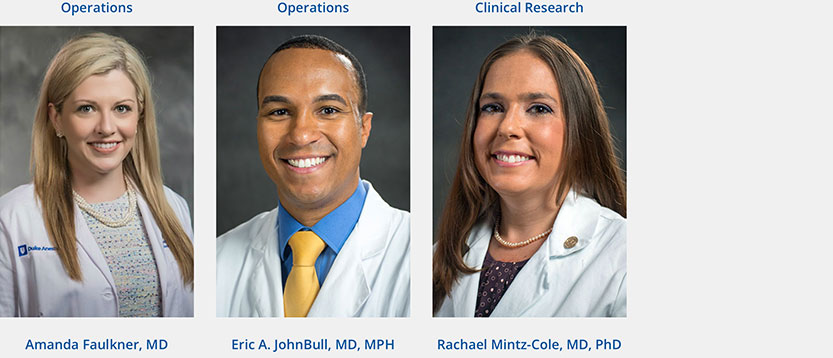
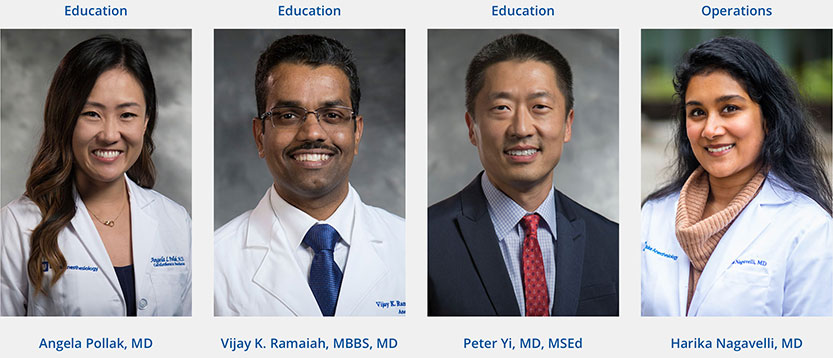
Meet the ABLE Scholars
Clinical Operations


Education


Translational Research
Clinical Operations
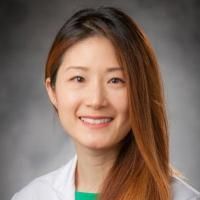
Data Science
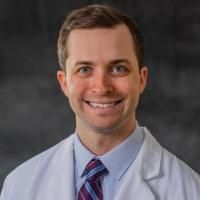
Education
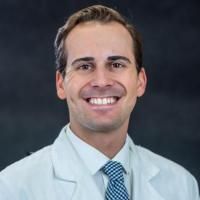

Translational Research