

RESIDENCY RECAP

Transition in Leadership
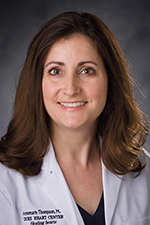
Following 11 years as director of the Duke Anesthesiology Residency Program — during which she set a standard of excellence that will resonate for years to come — and nearly nine months of interim service, Dr. Annemarie Thompson was appointed the department’s vice chair for education in April 2024. With this transition, we welcomed Dr. Brandi Bottiger (in May 2025) to her new role as residency program director.

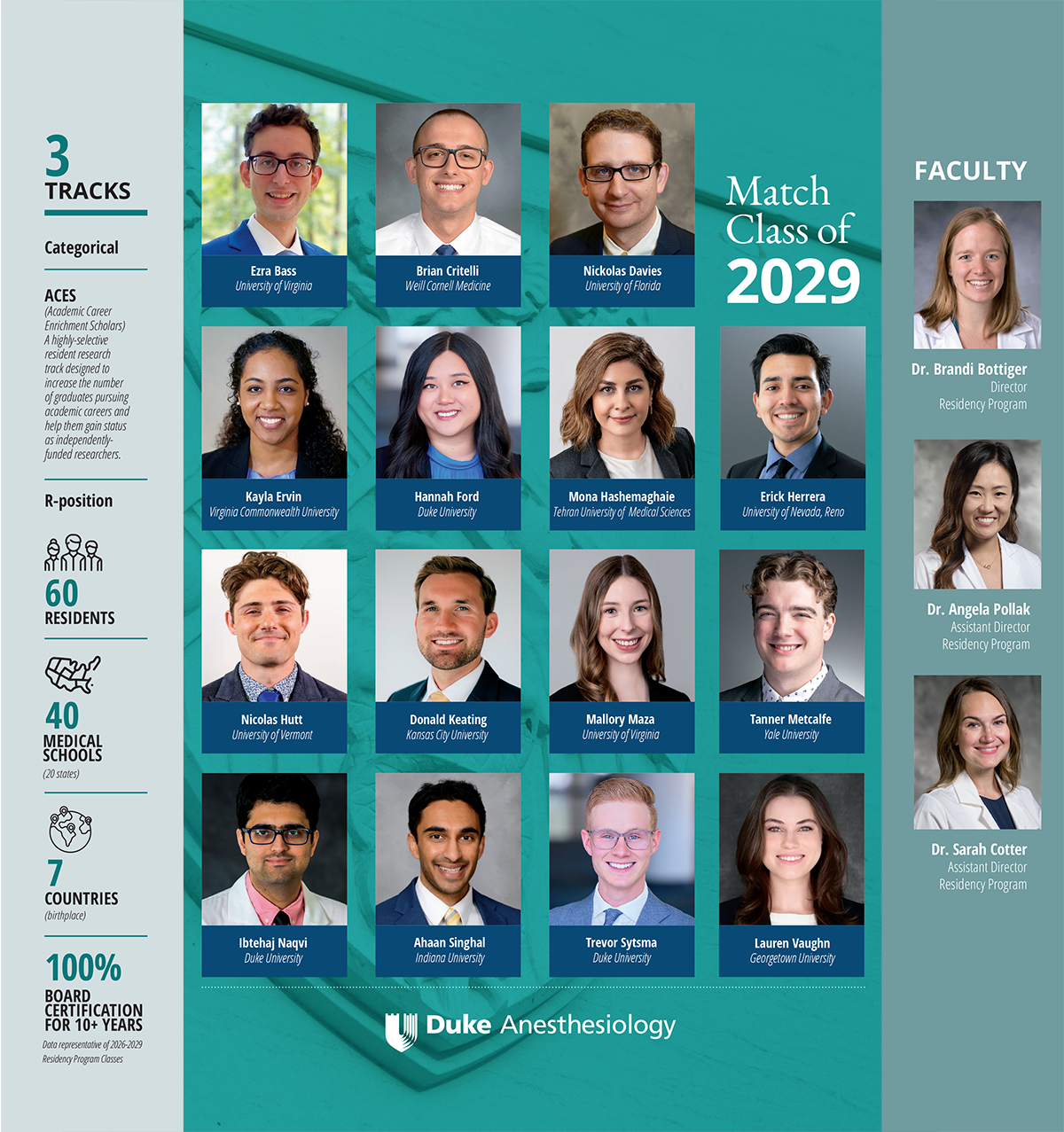
As a Duke Anesthesiology alumnus and award-winning educator, Bottiger brings 14 years of experience to her position in which she will lead and mentor approximately 60 future health care leaders within our acclaimed program. For nearly the past decade, she has served as the department’s Adult Cardiothoracic Anesthesiology Fellowship director and in 2019, became the first anesthesiologist to hold a medical directorship position within the transplant center at the Duke University Health System. Bottiger is a visionary leader who will continue to advance the innovative, clinically rigorous, and supportive residency program through robust mentorship and unparalleled clinical and educational experiences.
Thompson, a nationally acclaimed educator and leader in perioperative population health, has proven an integral part of Duke Anesthesiology’s overall success in graduate medical education. Under her leadership, she implemented innovative teaching methods, curriculum enhancements, and mentorship programs that have significantly elevated the residency program’s national ranking, notably maintaining a “top five” reputation nationwide, despite having the smallest residency in the top 10 programs. She brings 19 years of experience to her new vice chair role in which she aims to implement a comprehensive educational strategy that targets the needs of a diverse group of trainees and attending physicians. Her broad vision for education encompasses curriculum enhancement, amplifying interdisciplinary collaboration, implementing robust mentorship programs, expanding global outreach, and advancing research in education.
Resident Spotlight
Dr. Sujatha Cumaran | CA-3
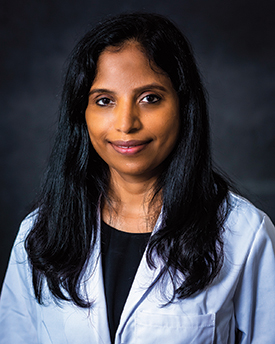
I live by F. E. Marie’s quote, “Choose the life you want and run in that direction. DON’T settle.” Medicine has always been my passion, and I have relentlessly pursued that dream, though my journey has been far from conventional. Growing up in rural India, I developed a deep respect for doctors while witnessing my mother’s battle with heart failure. Due to financial hardship and personal loss, I couldn’t pursue medicine initially and instead chose nursing, where I found immense fulfillment, particularly in serving underserved communities. I continued to grow academically and professionally, earning a master’s, post-master’s, and doctorate in nurse anesthesia. Despite my success in this field, my aspiration to become a physician never wavered.
As a CRNA, I was closely involved in patient care, working in high-stakes environments where quick thinking and an in-depth understanding of pharmacology and physiology were crucial. Yet, despite the satisfaction I found in this role, I was always drawn to the broader scope of patient care, particularly the diagnostic and decision-making aspects that physicians engage in throughout the perioperative period. I admired the expertise physicians held, especially when managing complex cases. My transition from CRNA to MD is not just a career shift, it’s the fulfillment of my lifelong dream, driven by passion, resilience, and a deep commitment to providing the highest level of patient care.
The transition to medical school and residency brought its own challenges, particularly in relearning the foundational sciences of medicine and broadening my approach to patient care. As a CRNA, I had advanced knowledge in pharmacology, physiology, and perioperative care. However, becoming an MD requires adopting a holistic, integrated view of patient care, moving beyond anesthesia. This shift required humility, as I went from a leadership role to a learner, reorienting my professional identity and relearning several aspects of medical practice.
I thoroughly enjoy my residency at Duke, which has been transformative, blending rigorous clinical training, exceptional mentorship, leadership development, and research opportunities. My cardiac rotation sparked an interest in cardiothoracic anesthesia, where I plan to pursue a fellowship. My goal is to become a leader and safety officer in cardiac anesthesia, enhancing safety protocols, mentoring future anesthesiologists, and contributing to care quality in high-risk cardiac procedures.
Alumni Shoutout
Tera Cushman, MD ‘16
Associate Program Director, Adult Cardiothoracic Anesthesiology
Oregon Health and Science University

How has your training at Duke Anesthesiology accelerated your practice of anesthesiology?
Duke is a program that constantly pushes the edge of the field forward. I came away from training with an ingrained habit of looking for ways to innovate, constantly re-examining how I do things, and gleefully rushing towards challenges.
How did your training prepare you for your leadership role as APD?
I learned in training that it’s important to care more for the hands that do the work than for the work itself. Yes, you need people to show up on time and to be competent. Yes, you need learners to listen to your feedback and achieve their learning objectives. But if you only care about the work product and not the human doing it, you rarely get someone’s best out of them and you rarely get the honest, unvarnished feedback that helps you improve as an educator and program director. I had excellent role models like Drs. Flanagan, Jones, Malinzak, Colin, Thompson, Olufolabi, and many others. I’m doing my best to pay it forward!
What are your greatest lessons learned from the Duke Anesthesiology Residency Program?
I was blessed to be part of outstanding residency and fellowship cohorts. I was extra blessed not to be the smartest (looking at you, Ben and Brittney), nor the best organizer (hi, Eun), or best resident (all of them, really) because it made me better to be around absolute bosses. The greatest lesson I learned was to surround yourself with the best and team up. It doesn’t matter what you’re doing. One of the photos above my desk is of the six women in my class banding together to help me pick out a wedding dress - that’s a memory that’ll never get old. Find good people, ideally better than you, and have a blast working with them.
What do you miss the most about Duke/Duke Anesthesiology?
Running in the Duke Gardens after a long OR day. Irreplaceable.
Why did you choose anesthesiology as your specialty?
In my undergraduate days, I sought solace from all chemistry all the time in producing, directing, and doing theater tech work for big splashy musicals. If you put chemistry and stage management in a particle accelerator, you’d get anesthesiology. All of the planning, cajoling, and hot gluing things together beforehand and then you’re in the thick of it and the show must go on. You can’t press ‘pause’ on an anesthetic and scrub out to clear your head and figure out what you’re doing. You have to keep things on the rails despite the best efforts of actors, surgeons, and whatever you didn’t expect to happen.
What keeps you going?
My family, community, patients, and colleagues. I get to live and work with wonderful people in a beautiful place and eat my weight in berries.
Advice for graduating residents?
Do work that makes you happy. The good doctors are usually the happy ones.
Stephen Gregory, MD ‘16
Division Chief, Washington University in St. Louis

How has your training at Duke Anesthesiology accelerated your practice of anesthesiology?
Duke made me a great anesthesiologist. The acuity, the high expectations, and the people there all taught me how to handle pretty much any clinical situation I have found myself in while practicing in the OR.
How did your training prepare you for your leadership role as division chief of perioperative medicine?
One of the best things I learned at Duke is how to manage people and processes, both inside and outside of the OR. I served as a chief resident in my last year of residency, and that experience really helped me learn how to make and present decisions fairly, even when they weren’t 100% popular. As a leader in my own department, many of the same skills that were required when I was a chief resident (diplomacy, decision-making, communication, and conflict resolution, in particular) are a regular part of my work in our preoperative assessment clinic. I also really benefited from having mentors during my residency who demonstrated to me how to be firm and fair in the way they approached leadership.
What are your greatest lessons learned from the Duke Anesthesiology Residency Program?
Two things: how to be a great clinical anesthesiologist and the importance of good colleagues and collaboration. I still routinely talk to my residency classmates about challenging cases or clinical scenarios.
What do you miss the most about Duke/Duke Anesthesiology?
I miss my residency classmates and the beautiful weather in Durham. I had an incredible residency class, and it has been great to see everyone find success. I still travel multiple times a year with two of my classmates (Suraj and Mike) where we hang out, mountain bike, and occasionally make a field trip to the local emergency department.
Why did you choose anesthesiology as your specialty?
Anesthesiology is fun. I originally was attracted to it because I really liked the people. They seemed easygoing but also capable of handling the most serious situations in the hospital. As a cardiac anesthesiologist, I love my job. I get to take care of some of our sickest surgical patients and get them through major operations. I also get to teach other people how to do anesthesia, which is a great privilege.
What keeps you going?
I have a lot of hobbies, and I have a great family here in St. Louis. I am an avid cyclist, video gamer, weightlifter, basketball player, and collector of hobbies. My wife, Katie, and I have two kids (Richter and Emery—both born at Duke during my residency!) and we love to travel. All of our family is here in the St. Louis area, so we are very fortunate to get to spend time with them as well.
Advice for graduating residents?
Be a good anesthesiologist first. If your colleagues see you as a truly excellent clinician, a lot of opportunity will follow. Also, don’t try to do something fancy you saw one of your attendings do in your first year of practice.
Advice for graduating residents?
Give yourself grace. Be honest with yourself. Recognize you’re human and thus not perfect.
Stay Connected
Follow the Duke Anesthesiology Residency-Run Instagram Page @dukeanesres