
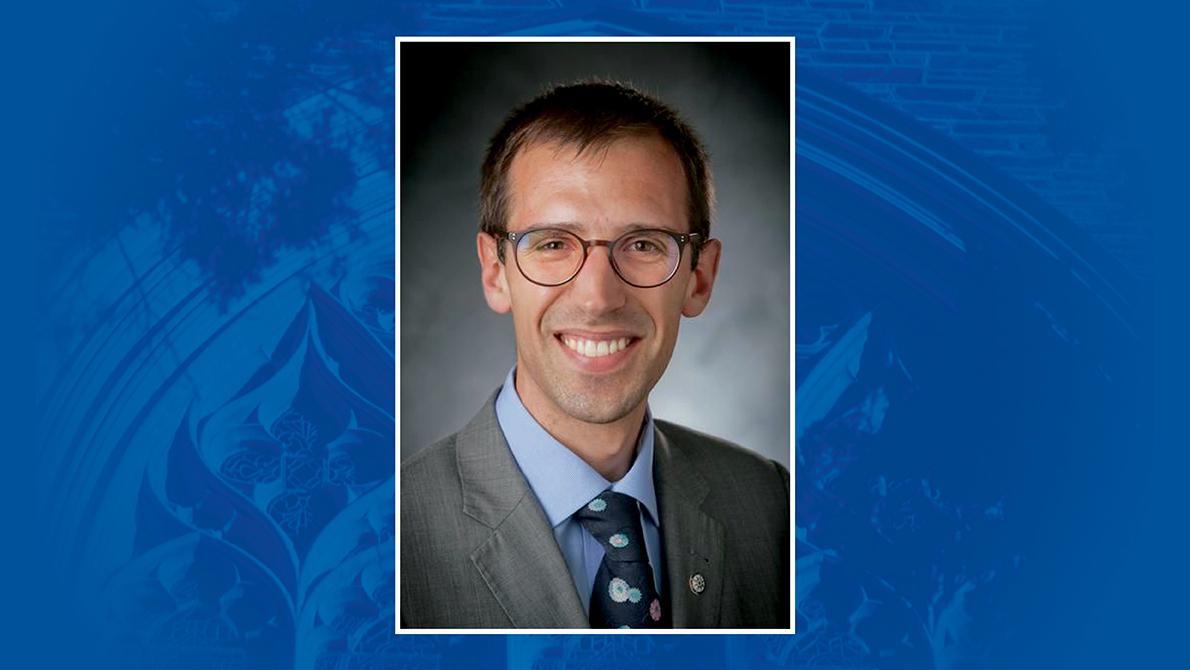
The National Institutes of Health’s National Institute on Aging has awarded Duke Anesthesiology’s Niccolò Terrando, PhD, a 5-year $2,969,873 MPI R01 grant for the project titled, “Defining the Role of Lipocalin-2 in Postoperative Delirium.”
“There are still many unanswered questions regarding how the immune system communicates with the brain in the context of common postoperative complications, such as delirium,” says Terrando, professor of anesthesiology and director of the Neuroinflammation and Cognitive Outcomes Laboratory. “This project leverages innovative methods and a collaborative team-science approach to elucidate the role of a specific therapeutic target, with the potential to inform novel strategies for preventing or treating postoperative delirium.”
Delirium remains one of the most common and challenging neurologic complications in hospital settings. Characterized by sudden confusion and severe shifts in mental state, it carries profound implications for patient recovery.
The research team’s pre-clinical studies leveraging mouse models with clinical biomarkers have already shed light on the early stages of the condition, revealing that postoperative delirium involves acute inflammation.
The newly funded project, with multi-PI Ting Yang, MD, MS, PhD, of Duke Medicine, is designed to test the hypothesis that surgery-induced neutrophil activation drives lipocalin-2 expression in the brain's endothelial lining, causing the blood-brain barrier to open and fuel neuroinflammation. To investigate this safely and precisely, Terrando and his research team will deploy innovative technologies to characterize neuroimmune changes in older surgical patients, building on preliminary data collected in collaboration with Sandro Da Mesquita, PhD, at the Mayo Clinic in Jacksonville, Florida. This will be combined with an advanced "neurovascular unit-on-chip" microphysiological system—an innovative, bioengineered model to deconstruct cellular interactions at the blood-brain barrier.
By utilizing this cutting-edge platform, the team will directly observe how the blood-brain barrier responds to immune challenges and specify the role of lipocalin-2 in postoperative neuroinflammation and delirium.
Ultimately, this project will provide vital translational evidence linking immune responses to brain vascular dysfunction. By uncovering the precise role of lipocalin-2 in signaling, this work paves the way for targeted clinical therapies designed to quiet neuroimmune storms, protect brain health, and protect vulnerable older adults from the devastating impact of postoperative delirium and subsequent cognitive decline.