
Critical Care Medicine (CCM) Fellowship Open Positions!
The Anesthesiology Critical Care Medicine fellowship has open positions for the year 2026-27 and is actively recruiting.
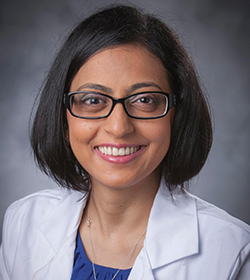
Fellowship Director
The Critical Care Medicine (CCM) Fellowship is an ACGME-accredited, comprehensive one-year training program that prepares anesthesiologists for careers in critical care medicine. The program provides broad clinical training in the management of critically ill patients, with opportunities to develop expertise in areas such as point-of-care ultrasound and transesophageal echocardiography (TEE). Fellows may pursue basic or advanced TEE training, with the potential to achieve board eligibility through the National Board of Echocardiography in addition to Critical Care Medicine board eligibility through the American Board of Anesthesiology. The program offers eight ACGME-accredited fellowship positions annually.
Fellowship Verification Explore our Division
If the request is for a State Medical Board licensure verification form that requires program completion, it should be emailed directly to the program coordinator for processing.
CCM Fellowship utilizes the SF Match process, under the sponsorship of the Society of Critical Care Anesthesiologists (SOCCA). Please visit www.socca.org and www.sfmatch.org for additional information.
To be considered for a Critical Care Medicine Fellowship position:
All required clinical education for entry into ACGME-accredited fellowship program must be completed in an ACGME-accredited Anesthesiology residency program, or a Royal College of Physicians & Surgeons of Canada (RCPSC)-accredited or College of Family Physicians of Canada (CFPC)-accredited residency program located in Canada.
Important Dates for the 2027 Match for July 2028 Positions
- November 2, 2026: Applicant Registration Begins
- January - May 2027: Interviews Offered
- March 3, 2027: Applications Due
- June 17, 2027: Match Day
- July 1, 2028: Training Begins
If you are interested in a one-year fellowship, please contact:
Nazish K. Hashmi, MBBS
Assistant Professor of Anesthesiology
Program Director, Critical Care Medicine Fellowship
Department of Anesthesiology
Box 3094
Duke University Medical Center
Durham, NC 27710
Email: nazish.hashmi@duke.edu
Sandy An, MD
Assistant Professor of Anesthesiology
Assistant Program Director, Critical Care Medicine Fellowship
Department of Anesthesiology
Box 3094
Duke University Medical Center
Durham, NC 27710
Email: si.an@duke.edu

Tasha Kelly Nicholson
Program Coordinator, Critical Care Medicine Fellowship
Department of Anesthesiology
Duke University Medical Center
DUMC 3094 #34
Durham, NC 27710
Email: tasha.kelly@duke.edu
Phone: 919-681-6532
Discover the Future of Anesthesiology with our New Fellowship Pathway!
We are excited to announce a groundbreaking opportunity for aspiring anesthesiologists: the Combined Anesthesiology Critical Care Medicine (CCM) and Perioperative Medicine Pathway. This innovative 12-month track, within our ACGME-accredited Duke Anesthesiology CCM Fellowship, is designed to enhance your expertise as a leader in perioperative care.
Program Highlights:
- Comprehensive Training: Spend nine months immersed in intensive critical care medicine and three months honing skills in preoperative optimization, perioperative risk management, and leadership development.
- Expert Guidance: Benefit from the dual mentorship of our Duke Anesthesiology CCM and perioperative medicine program faculty.
- Leadership Focus: Equip yourself with the knowledge and skills to excel in the evolving perioperative continuum of care, including research and leadership training.
Application Details:
Positions open for the 2026-27 academic year.
Start date: July 2026!
To Apply: Send your letter of interest and CV to Tasha Kelly Nicholson, program coordinator.
Join us in shaping the future of perioperative medicine. Apply today and take the next step toward becoming a leader in the field!
Nine months of ICU training, with an optional two-month dedicated TEE/operating room experience
- Trauma/Surgical ICU – Duke University Hospital (12-18 weeks): Comprehensive surgical critical care training, including a structured didactic curriculum in point-of-care ultrasound (POCUS) and advanced critical care echocardiography, with an emphasis on bedside assessment and ultrasound-guided clinical decision-making.
- Cardiothoracic ICU – Duke University Hospital (10-14 weeks): Management of postoperative cardiothoracic surgical patients, including patients requiring extracorporeal membrane oxygenation (ECMO) and advanced mechanical circulatory support (MCS).
- Medical ICU, Neuro ICU, and Palliative Care Consultation Service (2–4 weeks each): Additional rotations to broaden clinical experience across diverse critical care populations.
- Optional dedicated TEE training (up to 12 weeks): Fellows interested in advanced perioperative echocardiography may pursue dedicated TEE training, including cardiac anesthesia experience in the operating room and TEE examinations in and out of the OR. This experience is optional and may be tailored to individual career goals.
- Additional electives: Elective time may be available to accommodate individual educational interests.
Point-of-Care Ultrasound and Advanced Mechanical Circulatory Support
The curriculum emphasizes POCUS as a core skill in critical care practice, integrating bedside cardiac and pulmonary ultrasound, hemodynamic assessment, and advanced critical care echocardiography into daily patient management. Fellows develop practical skills in image acquisition, interpretation, and the application of ultrasound findings to complex clinical decisions.
A distinctive strength of the program is its comprehensive mechanical circulatory support (MCS) and ECMO education, delivered through multidisciplinary collaboration with cardiac surgeons, perfusionists, and critical care faculty. Educational experiences include:
- Dedicated MCS Week: An immersive, multidisciplinary curriculum developed in collaboration with cardiac surgeons and perfusionists, covering MCS physiology, device selection, cannulation strategies, troubleshooting, and management of complications.
- Bedside MCS rounds: Direct participation in the evaluation and management of patients receiving advanced mechanical circulatory support, connecting device physiology and hemodynamics to real-time clinical decision-making.
- ECMO simulation: Simulation-based training led by perfusionists focused on ECMO emergencies, troubleshooting, and team-based management of high-acuity scenarios.
- Longitudinal bedside learning: Integration of POCUS, advanced critical care echocardiography, and hemodynamic assessment into the management of patients with cardiogenic shock and complex circulatory failure.
Didactic Curriculum and Individualized Training
Fellows participate in weekly critical care conferences, case presentations, lectures, and interactive discussions covering the critical care core curriculum. Hands-on ultrasound training, multidisciplinary MCS education, and simulation complement these sessions to provide a practical, clinically integrated learning experience.
The program supports individualized training pathways. Dedicated TEE and cardiac anesthesia experience are optional, allowing fellows to prioritize POCUS, general and cardiothoracic critical care, ECMO, and MCS according to their intended career path, while offering additional depth in perioperative echocardiography for those who wish to pursue it.
Duke University Hospital is a quaternary referral center caring for patients with complex, high-acuity conditions, with approximately 14,000 ICU encounters annually across the health system. This diverse clinical environment provides fellows with distinctive opportunities to manage complex critical illness and gain experience across multiple critical care specialties. Fellows collaborate closely with surgical, pulmonary, neurocritical care, and anesthesiology critical care teams, gaining exposure to varied approaches to critical illness while developing the skills to integrate multidisciplinary perspectives into patient care. The fellowship’s breadth of clinical experience, combined with specialized training in point-of-care ultrasound (POCUS), mechanical circulatory support, and extracorporeal membrane oxygenation (ECMO), provides a unique foundation for the practice of contemporary critical care medicine.
All fellows are expected to develop proficiency in Point-of-Care Ultrasound (POCUS) as an integral component of their critical care training. The curriculum is supervised by faculty with specialized expertise and emphasizes the practical application of ultrasound to bedside assessment, diagnostic decision-making, and management of critically ill patients.
Point-of-Care Ultrasound (POCUS)
The POCUS curriculum is structured around training guidelines endorsed by the Society of Critical Care Medicine (SCCM), the American College of Chest Physicians (ACCP), and the American Thoracic Society (ATS). Training emphasizes the application of ultrasound to bedside clinical assessment across the following domains:
- Focused cardiac ultrasound
- Focused pleural and pulmonary ultrasound
- Focused renal and genitourinary ultrasound
- Deep venous thrombosis (DVT) assessment
- Focused Assessment with Sonography in Trauma (FAST)
All fellows are expected to participate in the core POCUS curriculum, which includes:
- Completion of designated computer-based learning modules
- Attendance at faculty-led didactic sessions
- Participation in hands-on scanning workshops
- Supervised ultrasound examinations of ICU patients, with written interpretations submitted for faculty review and feedback
- Maintenance and submission of a log of ultrasound examinations performed and interpreted, meeting applicable SCCM recommendations and Duke program requirements
- Individualized project assignment: Upon arrival, each fellow is assigned a faculty-mentored research or scholarly project aligned with their interests and professional goals.
- CAPER support: Fellows may leverage the resources and expertise of the Center for the Advancement of Perioperative Research (CAPER) to support project development, study design, research execution, and dissemination of findings.
- Research training: Fellows gain experience in:
- Hypothesis development and study design
- Research ethics, informed consent, and IRB processes
- Data collection, statistical analysis, and interpretation
- Manuscript preparation, publication, and research funding
- National presentation: All fellows are expected to present their scholarly work at the Society of Critical Care Anesthesiologists (SOCCA) or the Society of Critical Care Medicine (SCCM).
- Journal Club: Fellows participate in scheduled conferences to develop skills in critical appraisal of medical literature and application of evidence-based practice.
The fellowship provides opportunities to develop teaching, leadership, and administrative skills alongside clinical expertise.
- Formal teaching: Prepare and deliver lectures for medical students, residents, and fellows.
- Interprofessional education: Teach nurses, respiratory therapists, and other ICU team members through daily clinical interactions.
- Progressive autonomy: In the final months of training, assume a junior attending role with increased responsibility for patient management, clinical decision-making, and trainee education.
- Consultant development: Build the communication, teaching, and leadership skills essential for effective critical care consultants.
CCM fellows are mentored and taught by faculty from the Critical Care Medicine Division.
After graduation, Duke fellowship graduates enter either private or academic practice, which varies slightly with each graduating class. To get a first-hand account of our fellowship program, we encourage you to ask our current fellows or alumni about their experiences.
2026 Graduates

| Fellows 2025-26 | Where are they now? |
|---|---|
| Elise Clemens, MD | Faculty at University of Washington, Seattle, WA |
| Mogahed Hussein, MD | Faculty at University of Augusta, Augusta, GA |
| Jacqueline Quinn, MD | Faculty at University of North Carolina, Chapel Hill, Chapel Hill, NC |
| Albin Vleck, MD | Adult Cardiothoracic Anesthesiology Fellowship at Duke |
| Alexandra Waits, MD | Faculty at Baptist Health, Little Rock, AR |
| Anke Wang, MD | Faculty at Westchester Medical Center, Valhalla, NY |
| Andrew Wetherbie, MD | Adult Cardiothoracic Anesthesiology Fellowship at Duke |
| Pattrapun Wongsripuemtet, MD | Faculty at Mahidol University, Bangkok, Thailand |
2025 Graduates

| Fellows 2024-25 | Where are they now? |
|---|---|
| Bert Corina | Duke Faculty |
| Brian DelPino | Adult Cardiothoracic Anesthesiology Fellowship at Duke |
| Tiffany Dong | Duke Faculty |
| Brett Edelman | Private Practice in LA |
| Sophie Higgins | Faculty at Brooke Army Medical Center, San Antonio, TX - US Air Force |
| Wahida Khan | Faculty at University of Nebraska, Omaha, NE |
| Talha Saif | Adult Cardiothoracic Anesthesiology Fellowship at Duke |
2024 Graduates
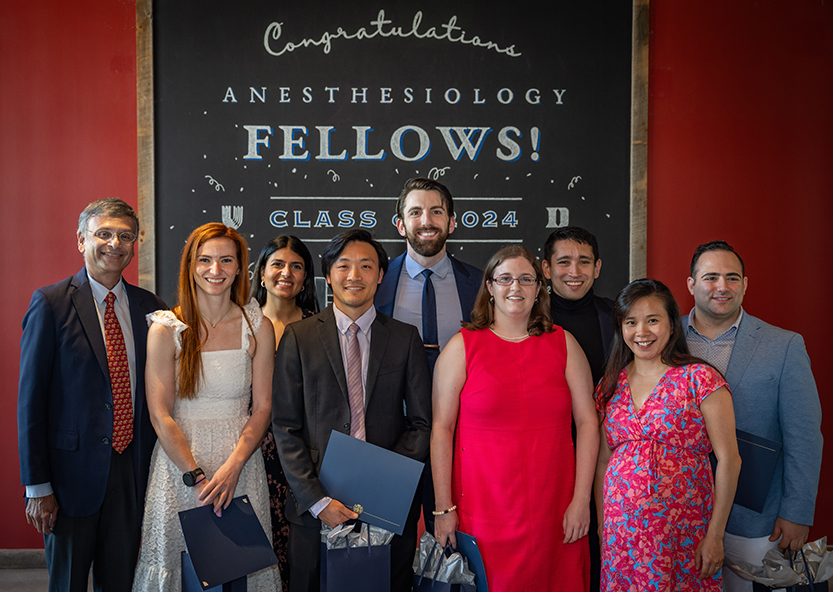
| Fellows 2023-24 | Where are they now? |
|---|---|
| Andre Savadjian | Morristown Medical Center, Morristown NJ (Anesthesia Associates of Morristown) |
| Andrew Kahng | WakeMed Hospital, Raleigh NC (East Carolina Anesthesia Associates) |
| Faryal Ahmad | Northwestern University, Chicago, IL |
| Kathryn Pearson | Carolinas Medical Center, Charlotte NC |
| Kelly Ivins O'Keefe | Brooks Army Medical Center and US Army Institute of Surgical Research, Fort Sam Houston, TX |
| Miguel Rovira | University of California in San Diego |
| Terrence Nowell | University of Tennessee at Knoxville |
2023 Graduates
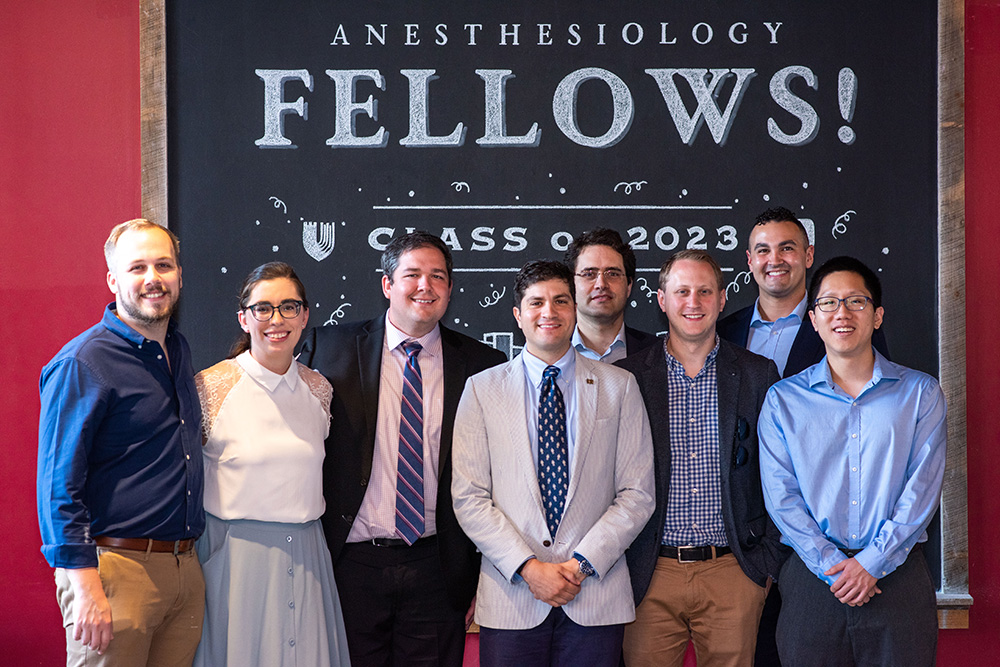
| Fellows 2022-2023 | Where are they now? |
|---|---|
| Yousef Ahmed | Naval Trauma Training Center USC-LAC |
| Bryan Chow | Duke Adult Cardiothoracic Anesthesiology Fellowship |
| Michael Cutrone | Duke Anesthesiology Faculty |
| Ethan Garrigan | Duke Adult Cardiothoracic Anesthesiology Fellowship |
| Rebecca Himmelwright | Duke Obstetric Anesthesiology Fellowship |
| Maximilian Hoffman | Brigham & Women’s Hospital Faculty |
| Rodrigo Pereira | Duke Adult Cardiothoracic Anesthesiology Fellowship |
| Tyler Poi | University Texas South Western, TX |
2022 Graduates
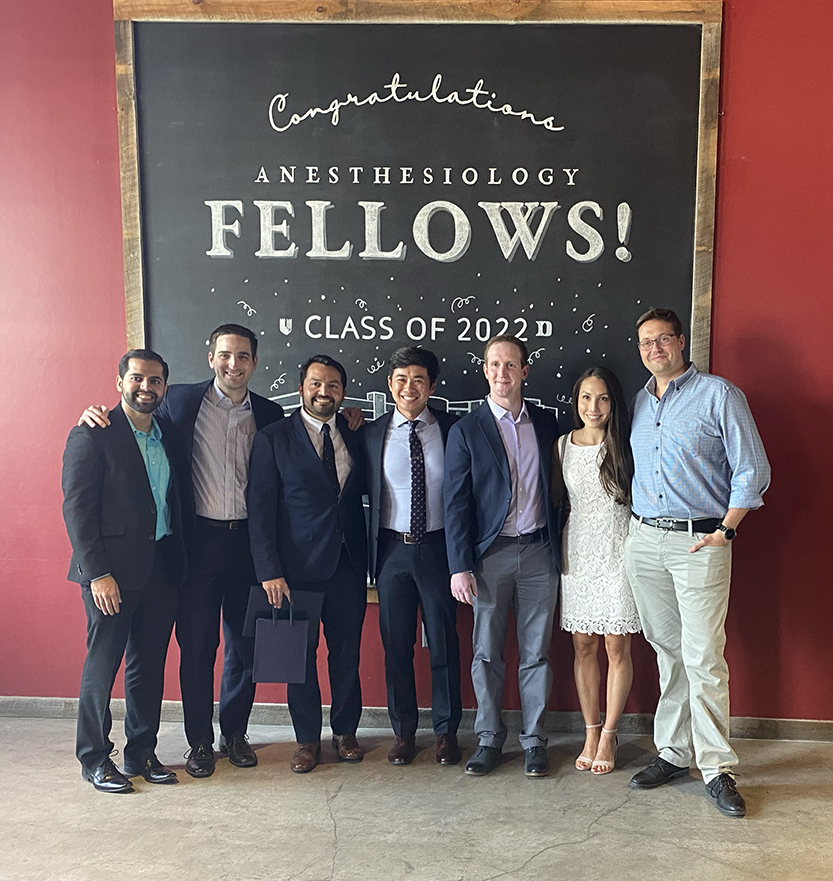
| Fellows 2021-2022 | Where are they now? |
|---|---|
| Daneel Patoli | Duke ACTA fellow |
| Michael Martinez | Private practice in Texas |
| Estuardo Saravia Fernandez | OHSU faculty |
| Matthew Li | Duke ACTA fellow |
| Sean Moore | Private practice in Illinois |
| Megan Fah | Mayo Clinic Arizona faculty |
| Russell-John Krom | Duke faculty |
| Blair Costin | Duke faculty |
2021 Graduates
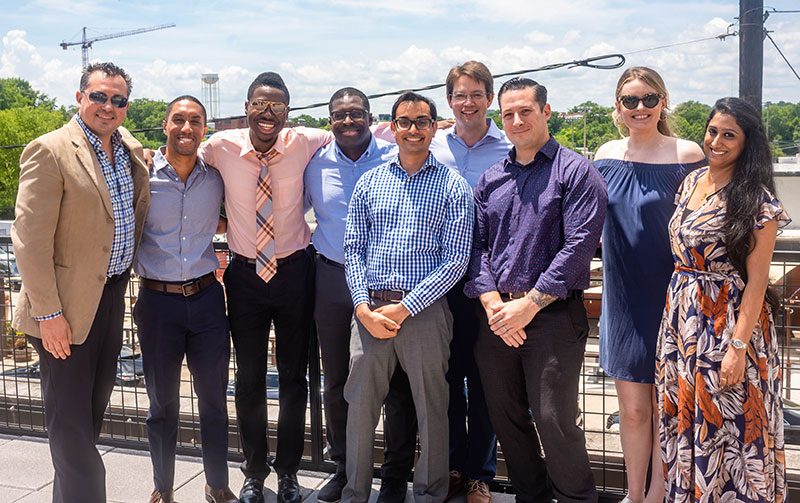
| Fellows 2020-2021 | Where are the now? |
|---|---|
| Selby Johnson | Private practice in San Antonio, Texas |
| Osa Obanor | UT Health Houston faculty |
| Darryl Kerr | University of Western Ontario faculty |
| Sachin Mehta | Duke faculty |
| Karl Kristianson | Kansas University Medical Center faculty |
| Jonathan Curley | University of Virginia faculty |
| Michele McGauvran | Private practice in Colorado Springs, UC Health |
| Karuna Puttur Rajkumar | Wake Forest SOM faculty |
2020 Graduates
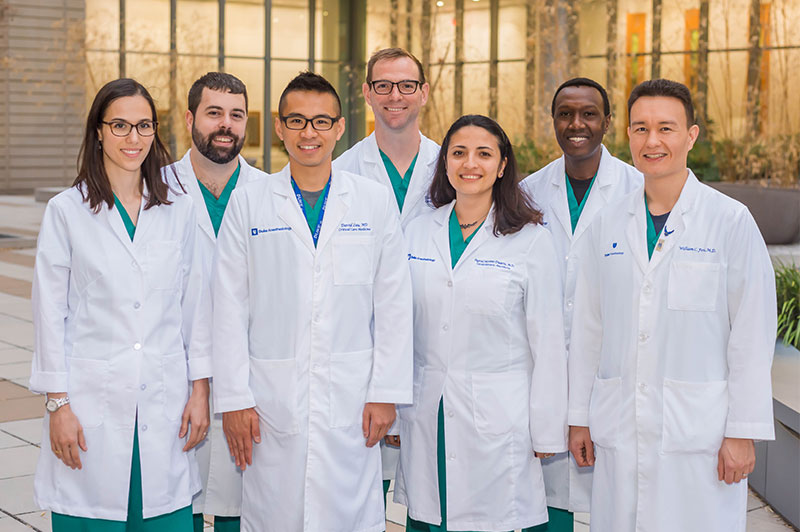
2019 Graduates
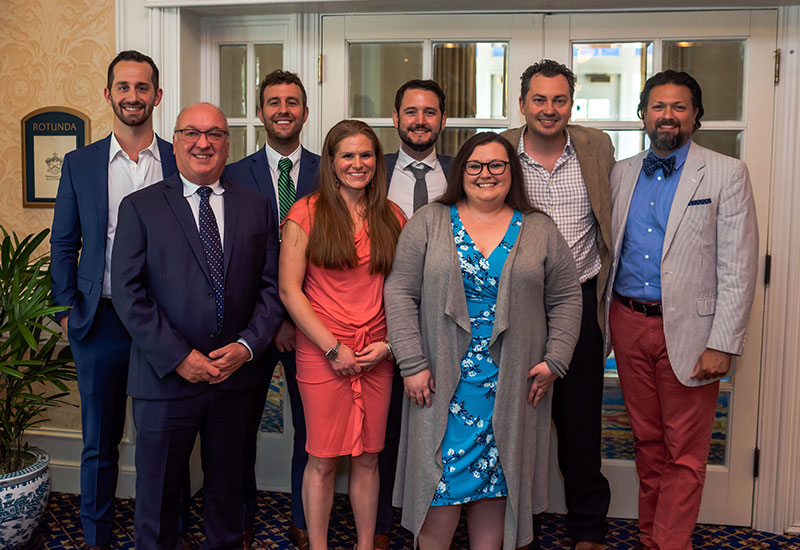
2018 Graduates
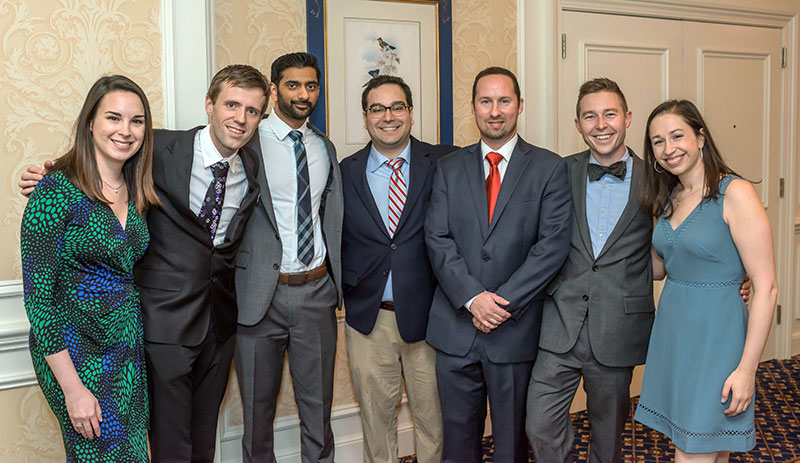
2017 Graduates
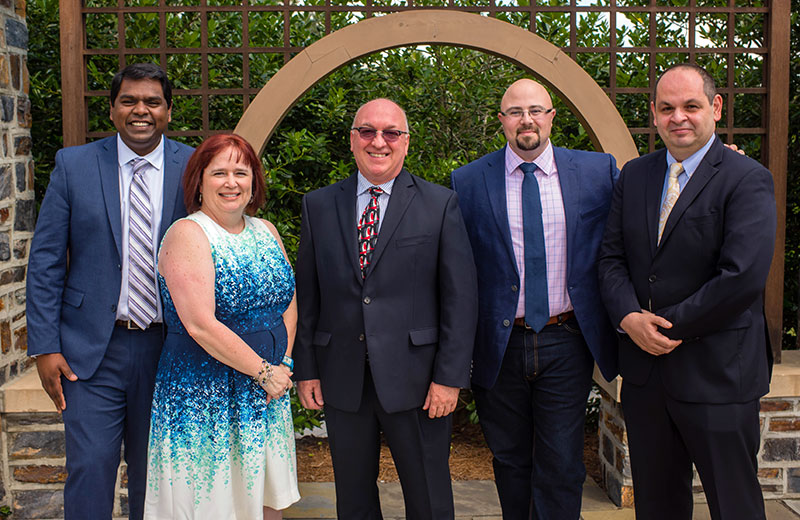
2016 Graduates
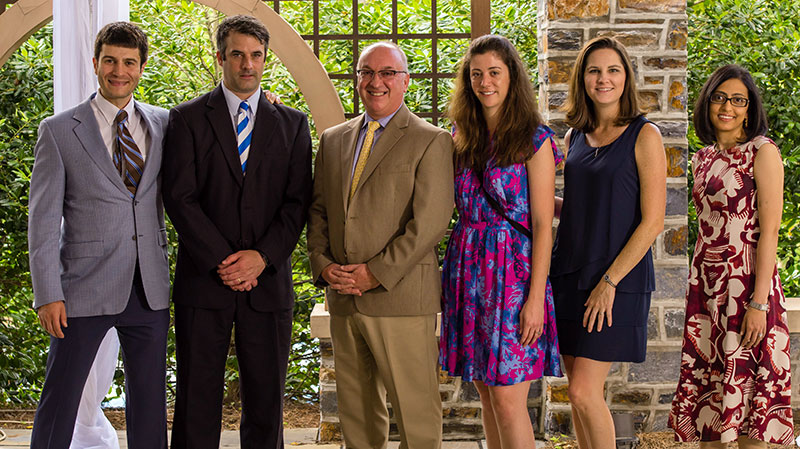
2015 Graduates

Find out why Durham, North Carolina is a great place to work and play.