

Providing state-of-the-art methodology for clinical, basic science and translational research empowers Duke Anesthesiology to explore revolutionary clinical inquiries by using innovative investigation methods. Through significant research in neuroscience, molecular biology, molecular and human pharmacology endeavors, our team is making crucial advancements for patients worldwide. Our laboratories offer an environment for groundbreaking findings that transcend boundaries in our field.
Duke Anesthesiology has made huge strides in research over the past 50 years. The accomplishments of current and former faculty, clinical and research postdoctoral fellows, research staff and residents have largely defined the department’s research program. Our current success can be credited to an environment that fosters growth, brilliant academics and a strong focus on the future of patient care, and also to a spirit of teamwork and interdisciplinary collaboration.
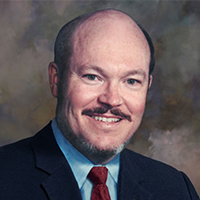
Our research program began in the FG Hall Laboratory where studies focused almost entirely on human physiology. This work brought Duke Anesthesiology research to national and international prominence and set an early precedent for successful peer-reviewed extramural funding. The FG Hall Laboratory was critical not only in defining modern hyperbaric medicine, but also in developing the department’s basic science component, which strives to further our understanding of cell function and its response to stress and drugs.

When David Watkins, MD, PhD, became chair of Duke Anesthesiology in 1983, he launched bench research in the department and oversaw the creation of the CRII Laboratory, which served as the department’s first human pharmacology lab. Peter S.A. Glass, MB ChB, directed this lab where numerous important concepts were developed, including the context-sensitive half-time and the bispectral index, which ultimately helped to popularize the use of total intravenous anesthesia as a standard anesthetic technique in clinical anesthesia practice.

In 1994, the late David S. Warner, MD, joined Duke as the chief of experimental anesthesiology and established a formal process for organizing basic science research. By 1998, basic science was considered a division within the department with Warner serving as chief. The Basic Science Division also encompasses translational research, an essential bridge between basic and clinical research that enables physician-scientists to apply information from animal disease models to human subjects.
At the time, translational research was a relatively new concept in academic anesthesia. This important area was often overlooked by major extramural funding sources, such as the National Institutes of Health (NIH), until about 15 years ago. A stronger emphasis on translational research has enabled our clinical research program to thrive.
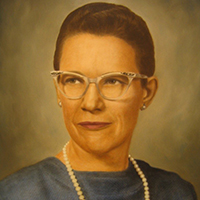
The earliest high-impact clinical research in anesthesiology at Duke was conducted by Sarah J. Dent, MD, and focused on postoperative nausea and vomiting (PONV). The study of PONV remains an active area of research in the department today. Former Duke Anesthesiology vice chair for faculty development, Tong Joo “TJ” Gan, MD, MHS, FRCA, played an influential role in proving the efficacy of antiemetics and establishing PONV consensus guidelines that are now an international standard of care. In addition to using acupuncture to prevent PONV and postoperative pain, Gan found acupuncture to be highly effective in reducing the severity and frequency of chronic headache. Gan and Glass, who later became chair of the Department of Anesthesiology at the University of New York at Stony Brook, also conducted pioneering work in the concept of perioperative goal-directed therapy and the use of bispectral index to monitor the depth of anesthesia – a technology now used around the world.

In 2005, Debra A. Schwinn, MD, James B. Duke Professor of Anesthesiology, played a critical role in developing bench research at Duke. As the director of perioperative genomics and vice chair for research, Schwinn set a standard for NIH-funded research in the department, made fundamental discoveries in alpha adrenergic receptor signaling, and recruited several NIH-funded faculty members, including Madan Kwatra, PhD, Elliott Bennett-Guerrero, MD, James Reynolds, PhD, and David S. Warner, MD, to expand the department’s research programs. “She set a standard for excellence in research conduct and innovation that continues to permeate the entire department,” said Warner.
Following Schwinn’s lead, Warner played a key role in the career development of countless world-class physician-scientists across a broad range of medical specialties. A world-renowned neuroanesthesiologist, Warner was known for his discoveries in the mechanisms of stroke and brain protection, acute brain and spinal cord injury, and therapeutic interventions. By establishing a strong foundation in neuroanesthesia basic research at Duke, Warner created a perfect environment for training and molding young physician-scientists. In fact, he served as the principal investigator for the department’s NIH-funded Training Grant, designed to develop physician-scientists through a research fellowship. Duke Anesthesiology has maintained this grant since 1996, when it became one of six anesthesiology departments in the nation to receive this honor. Former Duke Anesthesiology chair, Mark F. Newman, MD, Merel H. Harmel Professor, and Catherine M. Kuhn, MD, professor of anesthesiology, extended this concept to the residency program by developing a pioneering American Board of Anesthesiology-approved physician-scientist track, known as Academic Career Enrichment Scholars (ACES). This 5-year track substantively integrates formal research training with combined residency and fellowship clinical training.

The department’s research program underwent exceptional growth under the visionary leadership of the late William Maixner, DDS, PhD, who significantly shaped the field of pain research and education, profoundly impacting patient care. Maixner’s commitment to translating basic discoveries into novel diagnostics and treatments led to the creation of the Center for Translational Pain Medicine (CTPM), established in January of 2016 to further expand the department’s clinical and research program in pain medicine. The center has successfully recruited leading basic scientists, clinicians and clinical researchers who have a common core mission of developing novel therapies to improve patient care, and has rapidly become internationally recognized as a best-in-class translational pain medicine program. Maixner was also a driving force in the development of Duke Innovative Pain Therapies, a first-of-its-kind multidisciplinary pain practice in Raleigh that opened its doors to patients in September of 2016.

In parallel to the growth of the basic and translational research programs in pain medicine and organ protection, the Cardiothoracic Anesthesiology Division developed an exceptional track record of high-impact research related to cognitive dysfunction following cardiac procedures that began with the work of Joseph “Jerry” Reves, MD, former Duke Anesthesiology chair. Reves imparted his knowledge and passion for the study of cognitive dysfunction to Newman, who pioneered the study of cognitive dysfunction following cardiopulmonary bypass. This work opened the concept of perioperative genomics, and also led to major changes in the conduct of bypass that are now practiced worldwide.
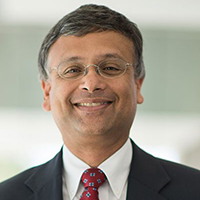
Joseph P. Mathew, MD, MHSc, MBA, Jerry Reves, MD, Professor of Anesthesiology and former chairman of Duke Anesthesiology, took this research a step further by investigating the effects of extreme hemodilution during cardiac surgery, evaluating the use of lidocaine to prevent cognitive injury, and assessing the utility of functional magnetic resonance imaging to better understand postoperative cognitive dysfunction. Mathew previously served as the department’s medical director of the Neurological Outcomes Research Group (NORG) and director of Clinical Anesthesiology Research Endeavors (CARE), now named the Clinical Research Unit (CRU). Following the leadership of Edmund Jooste, MB, Kamrouz Ghadimi, MD, became director of the CRU, with Anne D. Cherry, MD, serving as assistant director. The CRU is now led by Anne D. Cherry, MD, and Lisa Einhorn, MD, MHSc. From the initial academic focus on cardiothoracic anesthesiology, the CRU’s role has expanded to oversee the implementation and conduct of clinical research projects that lead to changes in clinical practice for the entire department.
The progress we have made in research over the past 50 years is absolutely astounding. Even more impressive, however, is the fact that we have seen a snowball effect. In recent years, the rate at which we are making life-changing discoveries has exponentially multiplied. We have witnessed first-hand countless advances in surgical and critical care interventions that were unimaginable just a few years ago. Basic science in particular, is exploding. The department has invested heavily in basic science research focused on mechanisms of chronic pain, a common affliction requiring breakthrough science to advance patient care. Neural mechanisms of injury and pain have become a rapidly emerging focus. With a strong translational science program now in place, these discoveries have led to changes in managing perioperative patients, thereby improving long-term outcome and quality of life. As the population ages, and physicians see a higher number of patients with significant co-morbidities, the value of anesthesia research cannot be overstated.

For three decades, the department has held an annual event, known as Academic Evening, to showcase ongoing research activities. This event has become a model for similar events organized by most leading anesthesiology departments across the nation. Academic Evening was the brainchild of Robert Sladen, MB ChB, and is now co-led by Dr. Miriam Treggiari, vice chair for research, and Dr. Anne Cherry. Each year, the event highlights more than 100 research projects, and 150-200 persons attend.
The department continues to push the limits of modern science by supporting original research concepts, recruiting world-class research faculty, and training the clinical and basic scientists of tomorrow. Together, we are advancing the future of patient care for generations to come.

Research News

Four Departments, One $3M Grant
Duke Team Receives Research Incubator Award

Signing of the “Morpheus Consortium”

3rd Annual Singapore-Duke Conference

That’s a Wrap! Highlights from ASA 2015

Winter 2014 DIG Report: Steve Melton, MD

Winter 2014 DIG Report: Michael Manning, MD, PhD, MBA

Winter 2014 DIG Report: Miklos Kertai, MD, PhD

Winter 2014 DIG Report: Karthik Raghunathan, MD, MPH
Spring 2013 DIG Report: Karthik Raghunathan, MD, MPH
Research Events
Duke Pain Journal Club
to
MSRB3, Room 6130, 6th Floor
Duke Pain Research in Progress (RIP)
to
MSRB3, Room 1125
Duke CTPM Seminar Series
to
MSRBIII, Room 1125
Duke Pain Journal Club
to
MSRB3, Room 6130, 6th Floor